
This isn't really a trust problem. It's a timing problem that shows up in any arrangement where one party holds the full amount before the other's share is settled. Here's why it happens, and what actually closes the gap.
The real problem: timing, not trust
When an agency describes a model "disappearing" with the money, what actually happened is usually simpler and less personal than it sounds: the full payout landed in her account, the agency's invoice went out afterward, and for whatever reason, expected or not, the transfer never came. She didn't need to plan anything or act in bad faith for this to happen. The structure made it possible the moment the full amount landed with one party before the other's share was settled.
This is the same underlying risk that exists in any commission relationship where payment is collected first and split second, a sales rep holding client funds before remitting a company's cut, a subcontractor paid directly by a client before paying a sub-subcontractor. The specifics vary, the structural gap is the same.
Why this happens so often with percentage-split agencies
Percentage-split arrangements (70/30, 80/20, and similar) route the full OnlyFans payout to the model first by default, since that's simply where the platform sends it. The agency's share exists only as an obligation until it's actually transferred. That obligation is enforceable in theory through a contract, but a contract doesn't move money, it only gives an agency something to point to after the money has already failed to move.
The risk compounds at exactly the moment agencies feel it least: end of contract, a disagreement over terms, or a model transitioning to a different agency. That's precisely when an outstanding invoice is least likely to get paid voluntarily, regardless of how clearly it was agreed to originally.
Why a contract alone doesn't solve it
A contract is necessary, but it answers a different question than the one that actually matters here. A contract establishes that a payment is owed. It does nothing to make that payment happen. Enforcing an unpaid contract after the fact means pursuing a claim, which costs time and money, isn't guaranteed to succeed, and in practice many agencies simply write off as a loss rather than pursue.
The contract answers "who is right." It doesn't answer "who actually has the money right now," and that second question is the one that determines whether the agency ever sees its commission.
- Stronger contract language. What it actually does: improves legal standing after non-payment, doesn't prevent it.
- Requiring payment before releasing new content or promotion. What it actually does: creates leverage, but escalates disputes rather than resolving the underlying timing gap.
- Agency holding the OnlyFans login or payout method itself. What it actually does: solves collection, but creates the separate legal exposure of operating an account it doesn't own.
- Frequent manual check-ins and reminders. What it actually does: works until it doesn't, and doesn't scale past a few models.
What actually prevents it: removing the point where it can happen
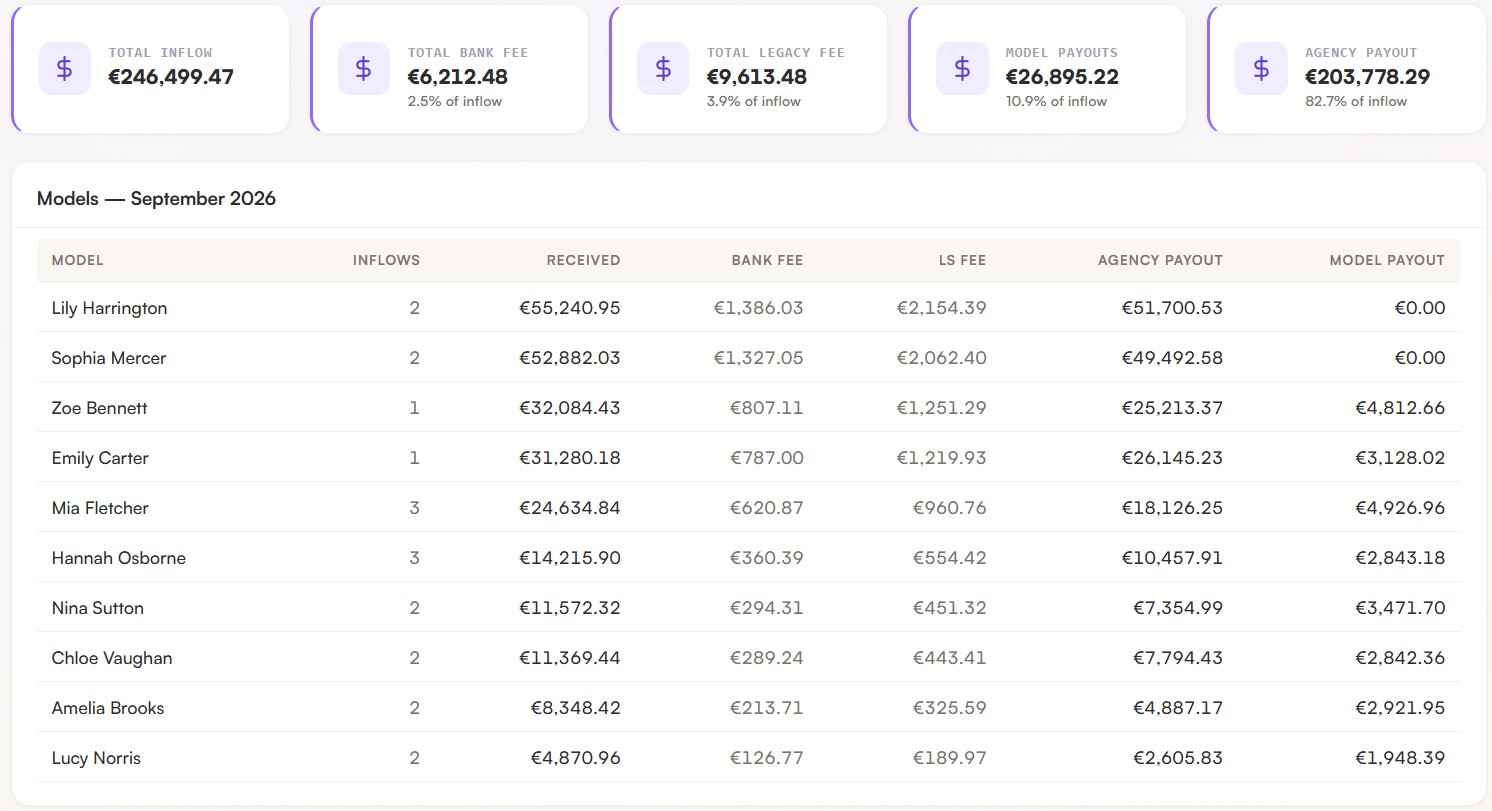
Every item in that list operates after the full amount has already landed with the model, which means every fix is managing the risk rather than removing it. The only setup that actually removes it is one where the full amount never lands with either party first: each model holds her own dedicated account, and the agreed split, her share and the agency's share, executes automatically the moment revenue arrives, before either side has anything to hold onto or withhold.
This isn't about limiting a model's access to her own money. She still receives her share, in full, on the same schedule as always. What changes is that the agency's share was never hers to forward in the first place, it was already routed separately as part of the same transaction.
How automatic splitting closes the gap
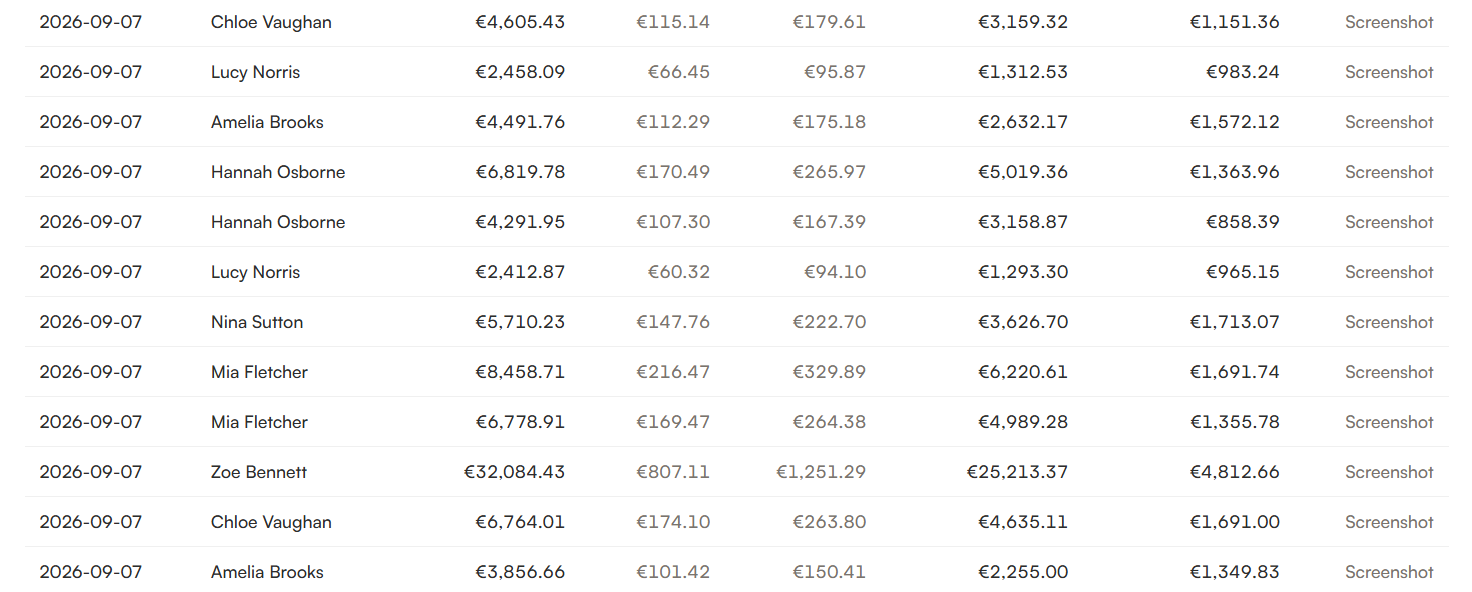
With a split executed by a licensed banking partner rather than by either party manually, both shares are calculated and paid out from the same incoming transaction. There's no window between "the money arrived" and "the split happened" for anything to go wrong in, because those two events are the same event. A model choosing to end the relationship, go unresponsive, or move to another agency doesn't change what already happened to last week's or last month's payouts, because the agency's share for each of those periods was already settled when it landed, not accumulated as a running balance owed.
This also removes the specific end-of-month exposure agencies describe most often. There's no large lump sum sitting in a model's account at any point that represents multiple periods of unpaid agency commission, because nothing accumulates unpaid in the first place.
What this means for the model relationship
Worth naming directly: a setup like this benefits the model too, not just the agency. She's not the one fielding "did you send it yet" messages, and she's not the one whose payout gets tangled up in a dispute if a relationship ends on bad terms. A system where both shares are already settled the moment revenue lands removes an awkward, recurring conversation for both sides, not just a risk for one of them.
Frequently asked questions
Is it common for models to not pay an agency's agreed commission?
It happens often enough that it's one of the most common operational complaints among agencies running percentage-split arrangements, though it's rarely the result of deliberate bad faith, it's usually a byproduct of the payout structure itself.
Can an agency legally take its commission automatically without the model sending it?
Yes, when the split is executed by a licensed banking partner based on an agreed contract, with each party's share calculated and paid out separately from the same transaction. This is different from an agency withdrawing funds from an account it doesn't own, which carries real legal risk.
Does automatic splitting mean the agency controls the model's account?
No. The model's dedicated account remains hers, verified and controlled by her. The banking partner executes the agreed split at the moment of payout, the agency has visibility into the numbers, not control over her account.
What should an agency do about commission that's already unpaid from a past period?
That's a contract enforcement question, not a structural one, and it typically requires the same recourse as any unpaid commercial debt, direct negotiation or, if necessary, legal action based on the underlying contract. Automatic splitting prevents this from happening going forward, it doesn't retroactively resolve amounts already owed.